Track Tickets



Iraq vs. Norway Tickets – World Cup 2026 | LiveFootballTickets.com
Norway open their World Cup campaign against Iraq at Gillette Stadium on 16 June, with kick‑off at 11pm UK time. As the first match of the group, Norway will want a strong start to settle any nerves, while Iraq will see it as an opportunity to make an early statement. With both sides coming in fresh and full of belief, it has the feel of a game that could set the tone for the rest of the group stage. Gillette Stadium, usually home to the New England Patriots, is a huge, open venue just outside New York City. It tends to draw a mixed crowd during big tournaments, and the atmosphere is often lively. The size of the stadium and the warm evening conditions often slow the tempo, so managing energy becomes important. With both teams likely looking to win the game, it has the makings of a tight, tense group match.
How to Buy Tickets for Iraq vs. Norway
Demand for World Cup fixtures will be high, and tickets are expected to move quickly once allocations open. In fact, our customer service team regularly hear from fans who want to know: How can I book World Cup tickets? And it can be tricky. Let's walk you through all the steps so you can start thinking about booking your flights across the Atlantic.
- Select the match you want to attend and click 'View Tickets'.
- Select the area you would like to sit within the stadium graphic on the right-hand side.
- Select the number of tickets you would like to purchase.
- Click on the green 'Buy' button.
- Complete the order form using your personal details.
- Don't forget to check that all your information has been input and is correct.
- Click 'Make Payment'.
- The tickets are now yours!
Ticket prices tend to vary depending on the seat category and match type, so do bear that in mind when selecting matches. Some games, mainly knockout matches or popular teams, can sell out incredibly quickly, so make sure you book early and are on high alert for when tickets come on sale!
Iraq vs. Norway Preview & Predictions
Norway will come into this match with a fair amount of confidence. Their qualifying campaign showed they can score goals and stay organised, and they still carry enough individual quality to trouble most sides. Iraq, however, arrive with strong momentum and a clear identity built on discipline and compact defensive structure. Their recent performances have been consistent, even if they are not always spectacular.
There is little head‑to‑head history to draw from, but Iraq's tournament experience in recent years gives them a degree of stability and cohesion. Tactically, this could unfold in several ways. Norway will likely look to control possession, push their full‑backs high and use the creativity of Martin Ødegaard to find openings. Iraq's best route lies in staying compact, breaking quickly and using their pace in transition to test Norway's back line.
The midfield battle feels important, but a tight, low-scoring game seems likely, with Norway slight favourites while Iraq remain capable of an upset.
Key Players to Watch
Norway's hopes in this tournament lean heavily on a small core of players who give them a clear route into matches against stronger sides. Martin Ødegaard is the organiser and creative spark, setting the tempo and finding pockets of space that allow Norway to advance play with control. Erling Haaland provides the cutting edge, offering power, movement and the ability to turn limited service into genuine chances. Behind them, Kristoffer Ajer anchors the defence with composure, stepping out when needed and covering large spaces against quicker forwards. Together, they form the spine that determines whether Norway can stay competitive against strong opposition like Iraq.
Iraq, meanwhile, will rely heavily on a core of players at this tournament. At the heart of the team is Aymen Hussein, the focal point who provides good movement and a constant threat inside the box. His ability to occupy defenders and turn half‑chances into real opportunities is central to how Iraq build attacks.
Behind him, Hussein Ali offers the creativity and link play that helps Iraq progress up the pitch. He finds pockets of space, carries the ball with confidence and gives Iraq a way to connect midfield to attack, especially in tight matches where control is hard to establish.
At the back, Ali Adnan brings experience and composure. His defensive reading, leadership and ability to step forward with the ball give Iraq balance on the left side. Together, they form the spine that shapes whether Iraq can stay competitive against strong opposition like Norway.
Gillette Stadium – Match Venue
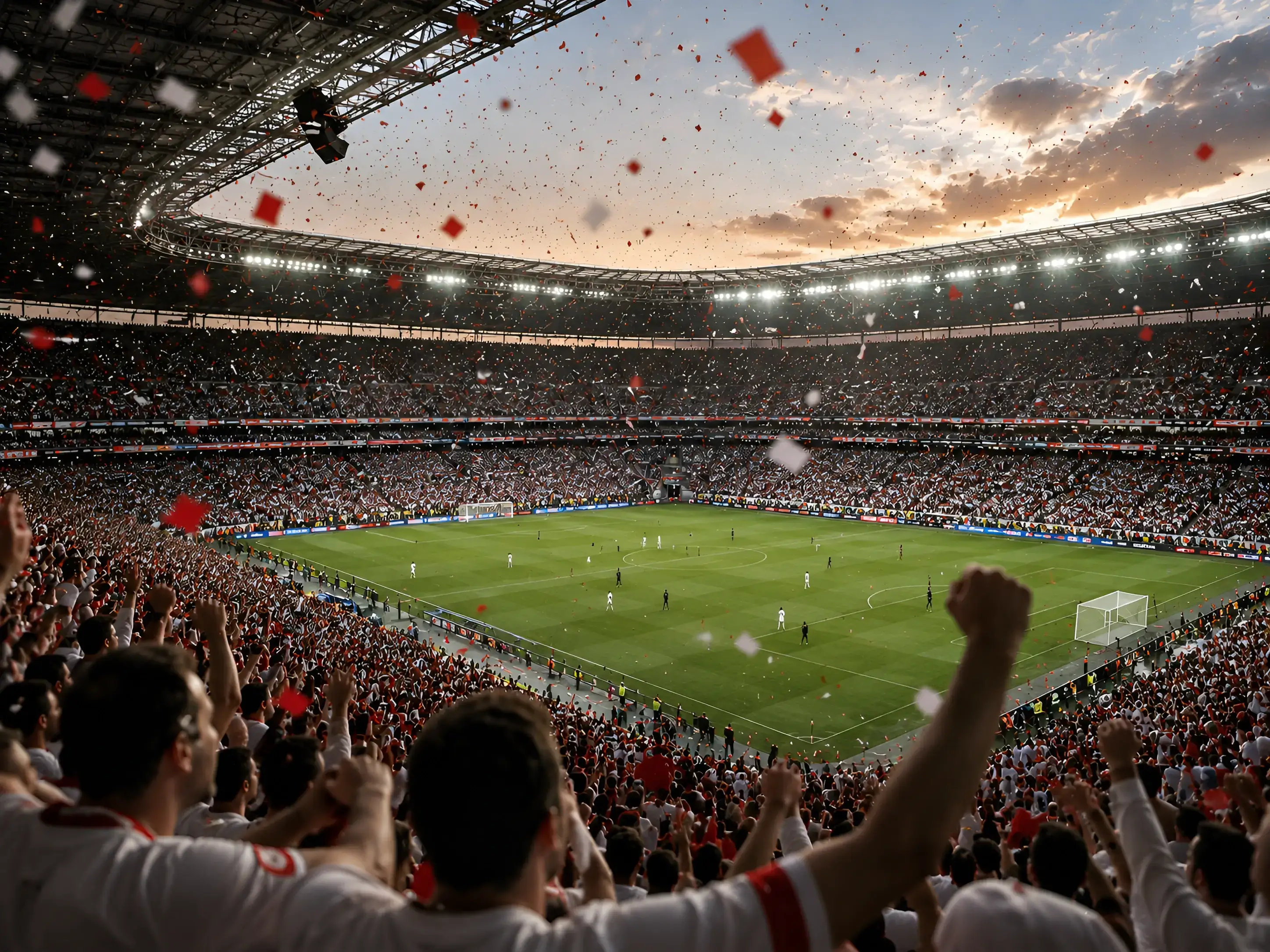
Gillette Stadium in Foxborough will offer a unique backdrop for Iraq's meeting with Norway on 16 June. Better known as the home of the New England Patriots, it's a modern, open‑bowl ground that holds just under 65,000 fans and has hosted its fair share of major international events. The stands are steep enough to keep the noise close to the pitch, and while it doesn't have the enclosed feel of some of the newer World Cup venues, it can still generate a surprisingly loud atmosphere when it fills up.
The concourses are spacious, the facilities are slick, and the sightlines are exactly what you'd expect from a stadium built with American sports in mind. It's more than capable of handling a match of this size. With Iraq likely to travel in strong numbers and Norway bringing a lively, vocal following of their own, it should make for a buzzing crowd.
How to Get to Gillette Stadium for This Match
Gillette Stadium sits in Foxborough, roughly halfway between Boston and Providence, so most supporters will be travelling in from one of the two city centres. The simplest option on match days is usually the MBTA Commuter Rail, which runs special event services to Foxboro Station, a short walk from the stadium. These trains tend to be busy in the hours before kick‑off, so arriving earlier than planned is rarely a bad idea.
For those not using the train, ride‑share options are widely available, though drop‑off zones around the stadium can become congested as crowds build. Driving is possible, but parking needs to be planned in advance: some lots are free, others paid, and traffic on Route 1 can be slow‑moving on event days. Many supporters opt for park‑and‑ride sites to avoid the bottlenecks.
The heat and humidity can be intense, so carrying water and allowing extra time for security checks is sensible.
Foxborough Fan Guide for Match Day
Foxborough isn't a traditional football hub in the European sense, but it's well used to hosting major events and has enough around Gillette Stadium to give match day some structure. The area immediately surrounding the ground is designed for big crowds, with a cluster of bars, restaurants and open spaces in the Patriot Place complex, which sits right next to the stadium. It's the natural gathering point for supporters and tends to fill up quickly on event days, offering the closest thing to a central fan zone.
Further out, both Boston and Providence will have their own pockets of activity, and many fans are likely to base themselves in one of the two city centres before travelling in. The atmosphere across the region is usually relaxed, with plenty of space and a steady flow of supporters moving between hotels, bars and transport links.
Head-to-Head History: Iraq vs. Norway
Norway and Iraq have almost no meaningful head‑to‑head history, which gives their 2026 World Cup meeting an added layer of mystery. The two nations have never faced each other at a World Cup, and their competitive paths have rarely crossed. Any previous encounters have been limited to low‑profile friendlies, offering little tactical or historical insight into how the sides match up today.
Because of that, there is no established rivalry or defining moment between the teams. Instead, the context is shaped by their contrasting footballing backgrounds. Norway have traditionally been a European side built on physicality, organisation and a handful of standout talents, while Iraq's identity has long centred on resilience and a strong collective spirit.
The most memorable aspect of this fixture may simply be its novelty. With no historical patterns to lean on, both teams enter on equal footing in terms of narrative. The match becomes less about past results and more about how each side imposes its style on the day, making it an unpredictable opening‑round fixture.