Track Tickets
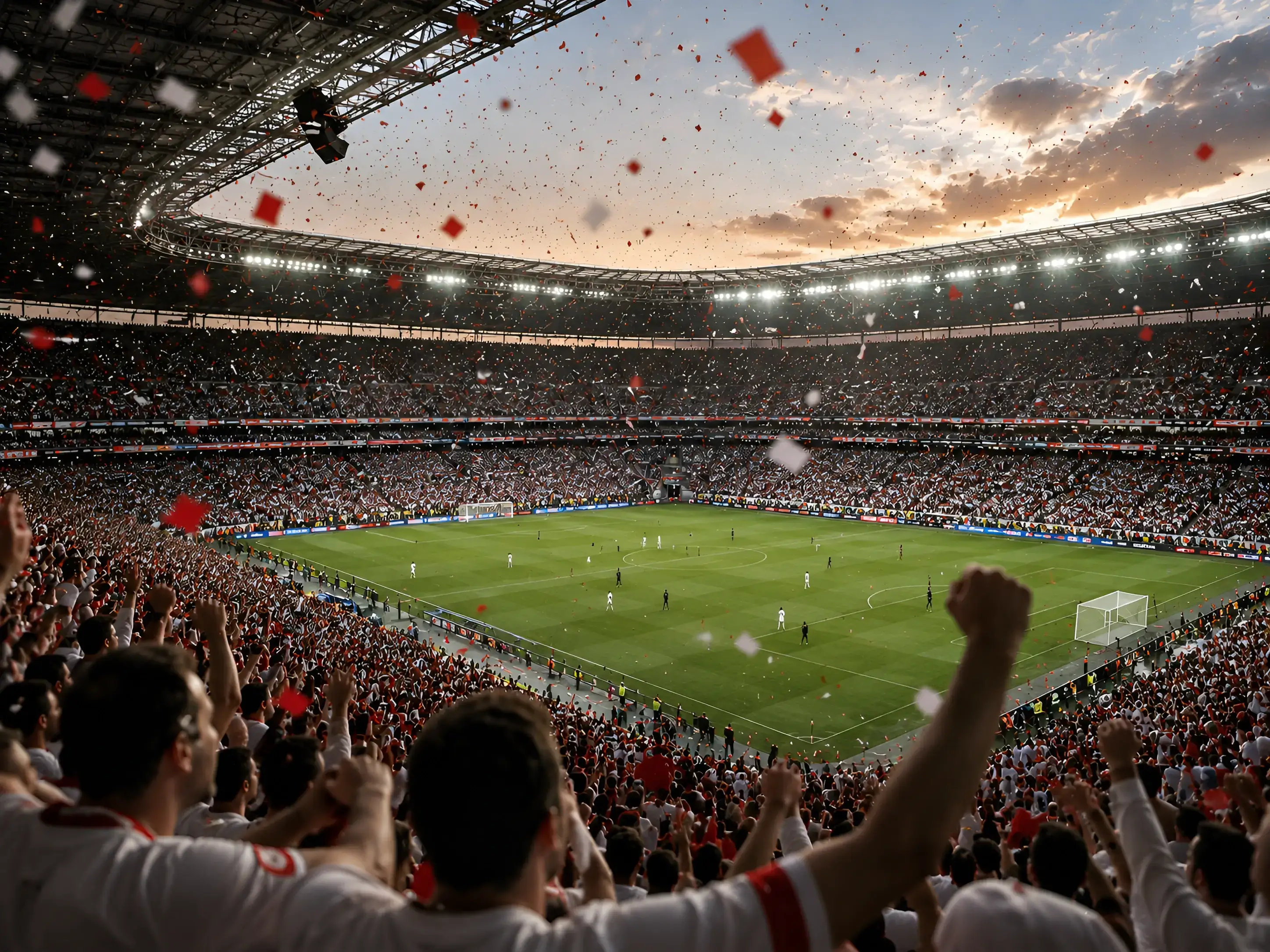



Buy Champions League Final 2027 Tickets, Metropolitano
You can reserve your 2027 Champions League final tickets in our dedicated booking system. On Saturday 5 June 2027 the Estadio Metropolitano in Madrid will host the biggest club football night in Europe. The 70,000-seat home of Atlético Madrid staged the 2019 final and returns as a host venue for the second time. For the players involved, lifting this trophy is something none could rival: the Champions League is the holy grail of club football, and winning it proves to be the moment of any career.
Champions League final 2027: Estadio Metropolitano, Madrid
The 2026/27 final takes place at the Estadio Metropolitano on Saturday 5 June 2027. Opened in 2017 on the site of the old Estadio de La Peineta, the ground is one of the most modern in Europe and sits in the east of the city, well connected to the centre by metro. Madrid is among the most accessible destinations on the continent for travelling supporters, with two international airports and a large hotel capacity, which makes this one of the more straightforward finals to plan a trip around.
| Match | Date | Venue | Location | Capacity |
|---|---|---|---|---|
| Champions League Final | Saturday 5 June 2027 | Estadio Metropolitano | Madrid, Spain | 70,000 |
Recent final venues
The final moves to a different host city every year, taking the showpiece to some of the continent's most iconic grounds:
- Madrid (Spain), hosts the 2027 final at the Estadio Metropolitano, its second after 2019.
- Budapest (Hungary), staged the 2026 final at the Puskás Aréna.
- Munich (Germany), hosted the 2025 final at the Allianz Arena.
- London (England), hosted the 2024 final at Wembley Stadium.
- Istanbul (Turkey), hosted the 2023 final at the Atatürk Olympic Stadium.
Defending champions: Paris Saint-Germain
Paris Saint-Germain arrive in the 2026/27 season as back-to-back European champions, the first club to retain the trophy since Real Madrid and only the second in the Champions League era to manage it.
Their 2026 triumph in Budapest came against Arsenal, in a final that finished 1-1 after extra time and was settled 4-3 on penalties. It was a far tighter affair than the year before, when PSG beat Inter Milan 5-0 at the Allianz Arena in Munich, still the biggest winning margin in any Champions League final. Achraf Hakimi opened the scoring in Munich before two goals from Désiré Doué, with Khvicha Kvaratskhelia and Senny Mayulu completing the rout.
Luis Enrique's 2025 victory made him just the seventh manager to win the Champions League with two different clubs, having previously won it with Barcelona in 2015. Winning it again in 2026 placed him among a very small group of managers to have retained the trophy.
Road to the 2027 Champions League final
The route to Madrid began with the qualifying rounds in the summer of 2026, where clubs from Europe's lower-ranked associations competed across three rounds and a play-off to complete the 36-team field for the league phase.
League phase
The draw for the league phase was made on 28 August 2026, pairing each of the 36 clubs with eight different opponents, two from each of the four seeding pots, four at home and four away. All 36 sit in a single league table across eight matchdays running from September 2026 to January 2027.
The top eight in the final standings qualify directly for the round of 16. The clubs finishing ninth to 24th enter a two-legged knockout play-off for the remaining places, and everyone from 25th down is eliminated from European competition for the season.
Knockout phase
The knockout play-offs are staged in February 2027, followed by the round of 16 in March, the quarter-finals in April and the semi-finals in late April and early May. Every round from the play-offs onwards is played over two legs, until the one-off final in Madrid on 5 June.
English clubs in the 2026/27 competition
England has five clubs in the league phase this season, the maximum allocation: Arsenal, Manchester City, Liverpool, Manchester United and Aston Villa. The draw handed them some of the standout fixtures of the campaign, including Real Madrid at the Emirates Stadium, Bayern Munich at Old Trafford and Paris Saint-Germain at Villa Park.
Champions League history and records
The Champions League has been around since 1955/56, when it was called the European Cup. The competition became the Champions League in 1992/93 and has used the league phase format since 2024/25. Over the decades, 24 different clubs have enjoyed the honour of lifting the famous trophy.
The most successful clubs
No club can rival Real Madrid, who have won the tournament 15 times. Their most remarkable run lasted five consecutive years from 1956 to 1960. AC Milan are second with seven wins, while Bayern Munich and Liverpool are tied third with six each, and Barcelona have five. Paris Saint-Germain moved onto two with their back-to-back titles in 2025 and 2026. Juventus hold the unwanted record of most final losses with seven, while Atlético Madrid have reached three finals without ever lifting the trophy, a statistic that will carry extra weight with the 2027 final staged at their own ground.
| Club | Titles won | Most recent |
|---|---|---|
| Real Madrid | 15 | 2024 |
| AC Milan | 7 | 2007 |
| Bayern Munich | 6 | 2020 |
| Liverpool | 6 | 2019 |
| Barcelona | 5 | 2015 |
| Ajax | 4 | 1995 |
| Paris Saint-Germain | 2 | 2026 |
Recent Champions League finals
| Year | Winners | Runners-up | Result |
|---|---|---|---|
| 2026 | Paris Saint-Germain | Arsenal | 1–1 (4–3 pens) |
| 2025 | Paris Saint-Germain | Inter Milan | 5–0 |
| 2024 | Real Madrid | Borussia Dortmund | 2–0 |
| 2023 | Manchester City | Inter Milan | 1–0 |
| 2022 | Real Madrid | Liverpool | 1–0 |
| 2021 | Chelsea | Manchester City | 1–0 |
Individual player records
Francisco Gento and Paolo Maldini each appeared in eight finals, a record unlikely to be surpassed. Gento won six of those with Real Madrid in the 1950s and 1960s, still the most by any individual player. Since 1992/93, five players share the record of six final appearances: Dani Carvajal, Toni Kroos, Luka Modrić, Nacho Fernández and Cristiano Ronaldo.
Memorable final scorelines
The 2025 final between PSG and Inter Milan produced the largest winning margin in Champions League final history, with PSG winning 5-0. Before that, Real Madrid's 7-3 defeat of Eintracht Frankfurt in 1960 remains the highest-scoring final ever, with hat-tricks from Alfredo Di Stéfano and Ferenc Puskás. For pure drama, nothing rivals the 2005 final in Istanbul, where Liverpool came back from 3-0 down at half-time against AC Milan to draw 3-3 and win on penalties, a night known forever as the Miracle of Istanbul.
Top final goalscorers
Ferenc Puskás holds the record for most final goals with seven, including four in the 1960 final against Eintracht Frankfurt. Alfredo Di Stéfano scored in five consecutive finals from 1956 to 1960. In the modern era, Cristiano Ronaldo leads with four goals across multiple finals.
The greatest managers
Carlo Ancelotti is the most successful manager in the tournament's history, winning five titles: two with AC Milan (2003, 2007) and three with Real Madrid (2014, 2022, 2024). He is the only manager to appear in six finals. Zinédine Zidane and Pep Guardiola have both won three, with Zidane's three consecutive titles with Real Madrid from 2016 to 2018 a remarkable achievement. Luis Enrique joined the list of multiple winners with PSG's back-to-back triumphs in 2025 and 2026.
Final venues through the years
London has hosted more Champions League finals than any other city. The original Wembley Stadium hosted five finals, making it the most used single venue in the competition's history. Germany has provided the most diverse range of host venues, with five different stadiums across the country. Other iconic venues to have hosted finals include the San Siro in Milan, the Santiago Bernábeu in Madrid and the Allianz Arena in Munich. Madrid now becomes a repeat host, with the Estadio Metropolitano staging its second final in eight years.
Which countries dominate the Champions League?
Spain leads all countries with 20 victories, driven almost entirely by Real Madrid (15) and Barcelona (5). England has produced the most diverse set of winners, with six different clubs lifting the trophy: Liverpool, Manchester United, Nottingham Forest, Aston Villa, Chelsea and Manchester City. France's tally has risen sharply in recent seasons, with PSG's two titles adding to Marseille's win in 1993.
Key milestones in Champions League history
The competition has changed drastically since Real Madrid won the first European Cup in 1956. Initially open only to domestic league champions, it gradually expanded to include runners-up from 1997 and third and fourth-place finishers from 1999. The biggest structural change came in 2024/25 with the introduction of the league phase format. The competition has also navigated difficult moments: English clubs were banned from European competition for five years following Heysel in 1985, and the 2020 final was held behind closed doors due to the COVID-19 pandemic. Seven finals have now been decided by a penalty shootout (1986, 1988, 1991, 1996, 2001, 2005 and 2026), and only three hat-tricks have ever been scored in a final.
Tickets for the 2027 Champions League final
The two finalists will not be known until the semi-finals conclude in May 2027, but demand for seats at the Estadio Metropolitano will be exceptional from the moment tickets become available. Check our dedicated booking section for the latest availability, and browse fixtures across the Champions League throughout the season. Every order comes with our 150% money back guarantee.